
Reviving Detroit’s Regent Park Neighborhood
The following article was written by Laura Fitzgerald of ModeldMedia on December 8th, 2025
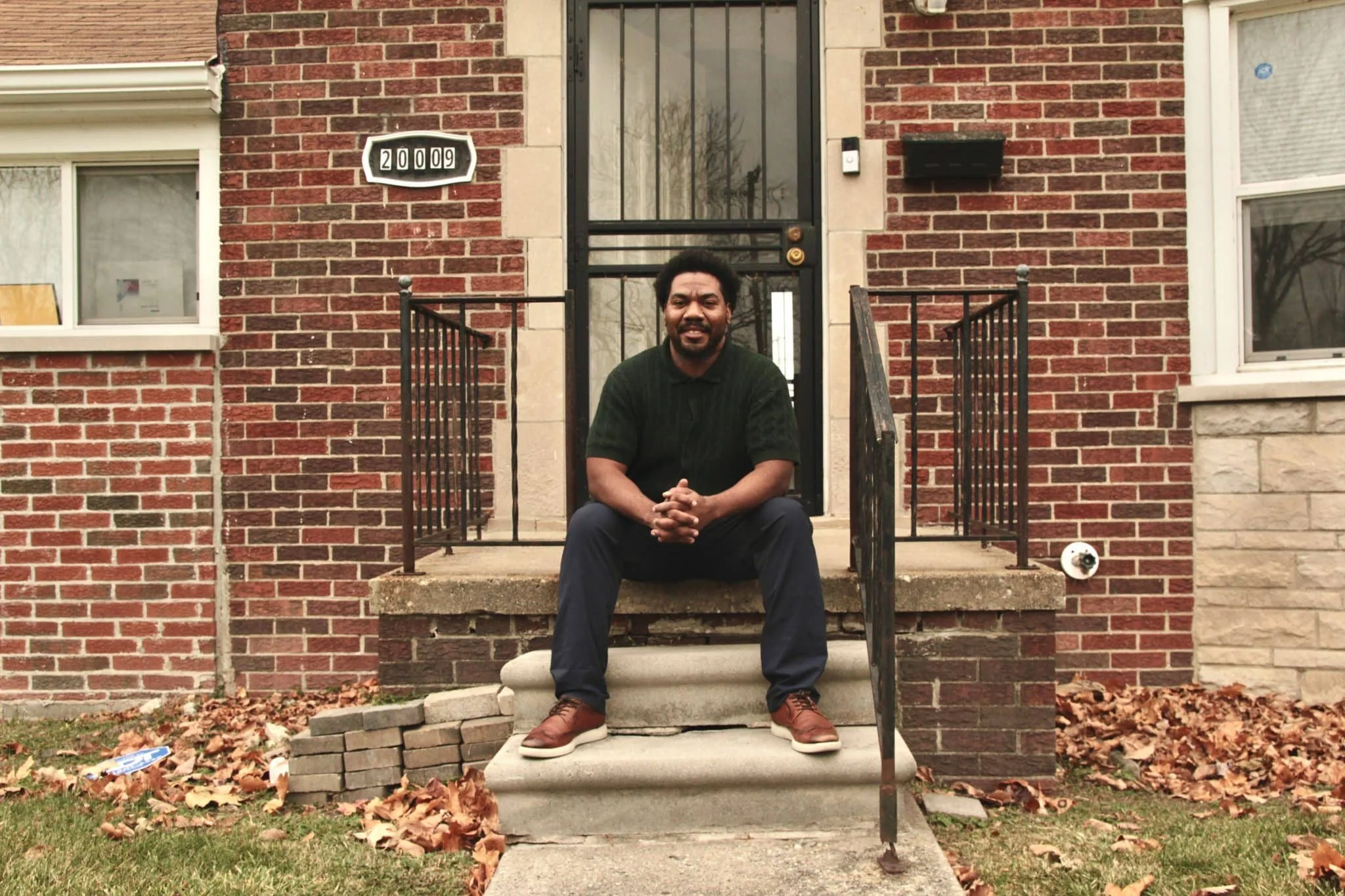
Jonathan Griffin found an affordable brick home in the Regent Park neighborhood, in northeast Detroit. PHOTO: Jonah Clynes
Lifelong Detroiter Jonathan Griffin never thought he would be a homeowner.
But LifeBUILDERS – a faith-based nonprofit in Regent Park that rehabs blighted homes to rent and sell to residents – changed that dream. Griffin, his wife, Lalisha Griffin, and their three daughters bought the home they had been renting from LifeBUILDERS recently.
While it was not LifeBUILDERS who made the Griffins consider home ownership – that was serendipity brought on by a Zillow agent – the nonprofit did provide an affordable sale price that would have been difficult to find elsewhere, Griffin says. The homes within their budget weren’t the right fit or weren’t in great shape, and more ideal homes were too expensive.
Griffin is an academic interventionist at a westside middle school, which, while not a high-paying job, he finds it rewarding for the impact he makes on students every day.
“It was a no-brainer,” Griffin says. “I’m almost 40, and buying a home felt like it was out of reach. The fact that I’m able to own a home and continue to do what I love is amazing.”
Restoring the neighborhood one home at a time
LifeBUILDERS was established in 2005 in Regent Park with the mission of restoring a community that had suffered from the devastating effects of disinvestment for decades.
Bordered by Kelly Road, Gratiot Avenue, 8 Mile Road, and 7 Mile Road, the neighborhood in the city’s far northeast corner was once a thriving community that housed the city’s police officers, firefighters, teachers, and city workers. When a 1999 state law lifted the requirement for city employees to live in Detroit, residents fled to the suburbs.
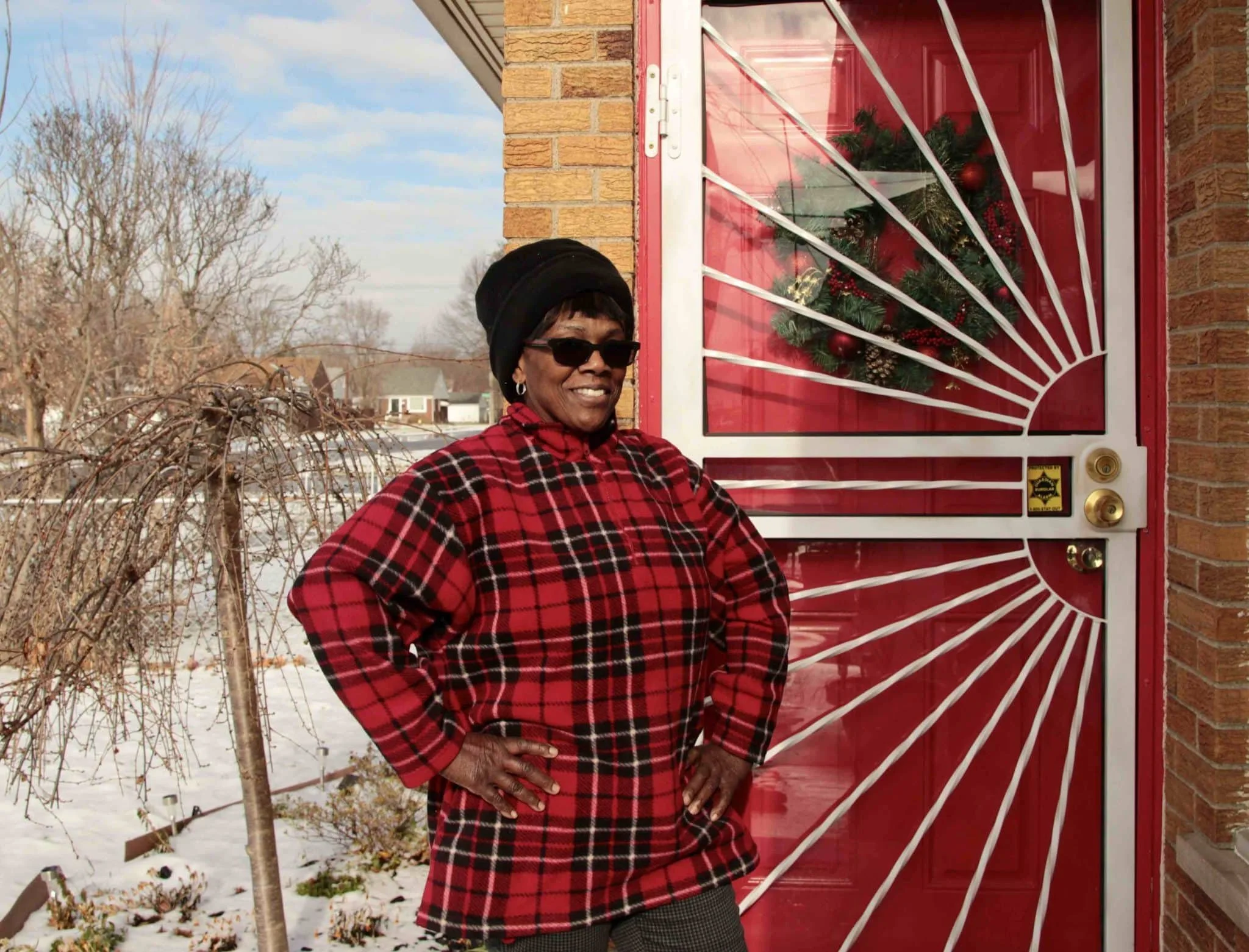
Pam Mason bought her Regent Park home in 2022 from LifeBUILDERS after renting it for six years. PHOTO: Jonah Clynes
The housing market crash and the Great Recession of the late 2000s further accelerated the neighborhood’s decline. Crime and gang activity rose, blight crept into the houses, and opportunity in the form of good education and jobs vanished.
That’s when Founder and Executive Director Larry Johnson and his wife, Marilyn, stepped in. Slowly, LifeBUILDERS began buying vacant, blighted properties to restore and sell or rent to Detroit residents. Going house by house and block by block, the nonprofit has now restored 80 single-family homes and helped an additional 56 homeowners in Regent Park receive home repairs through grants, says Deputy Director Noah Stricker.
Tackling community revitalization on multiple fronts, the nonprofit also advocated for government funds for speed bumps, street lighting, public parks, and public services; created youth recreational and enrichment programs; successfully lobbied for federal funds to remove vacant, dangerous properties; and transformed an abandoned school into a state-of-the-art Early Childhood Center.
“We recognized as the blight was removed, people were moving into the houses and the neighborhood began to be revitalized,” Johnson says. “It has been great to see Detroiters move into the community and become homeowners.”
Addressing the affordable housing crisis
LifeBUILDERS offers homes for rent or sale at affordable rates to Detroit and Metro Detroit residents. Renters often turn into owners, Stricker says. The nonprofit connects tenants and prospective tenants with the resources and programs they need to buy a home, including credit repair, down payment assistance programs, and other resources.
LifeBUILDERS residents are a diverse range of ages, socioeconomic statuses, and occupations, Stricker says, but most are current or former Detroiters with deep ties to the city.
Many renters in the city face substandard or even unsafe living conditions because landlords don’t invest the time and money into maintaining their properties. Renters might be too scared or busy to advocate for themselves or might not even be aware of their rights, Stricker says.
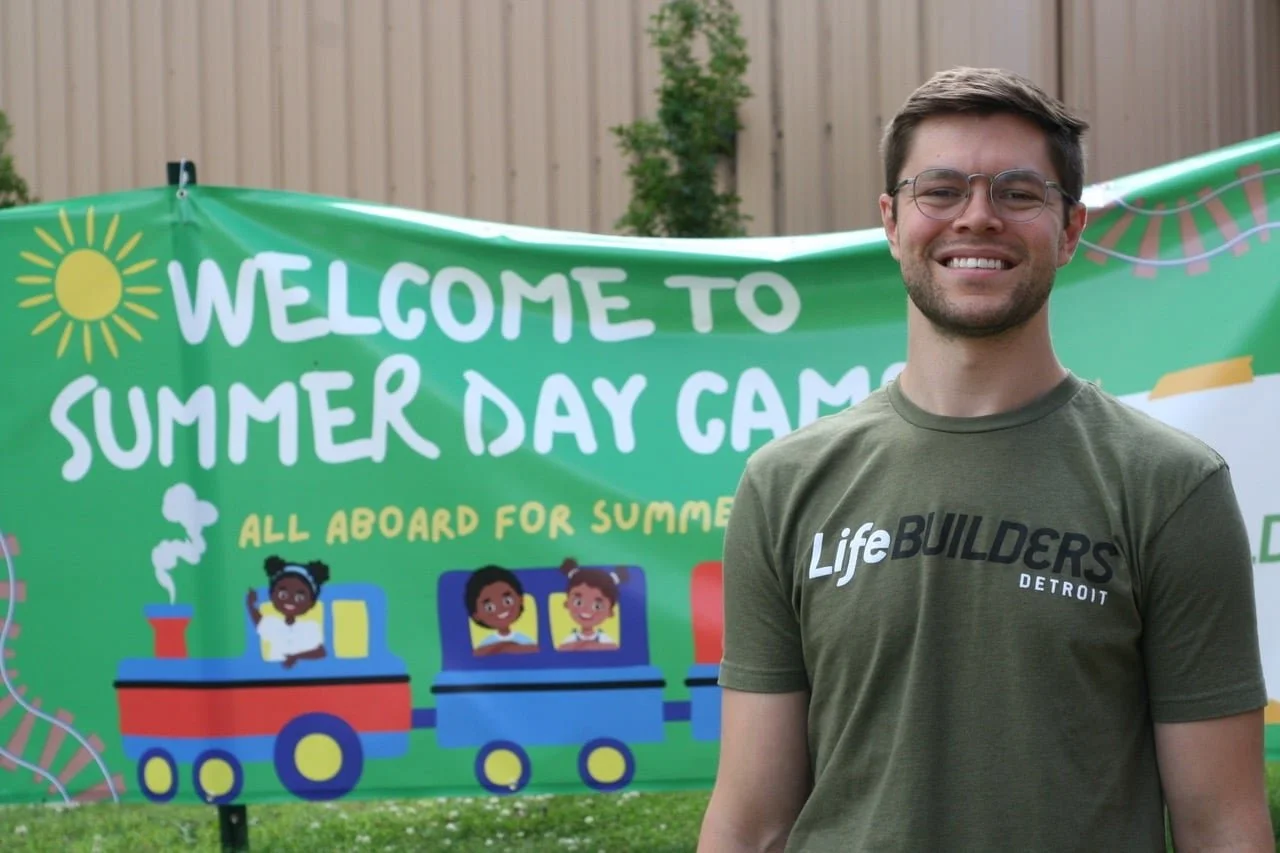
Noah Stricker, shown here in June 2024, is Deputy Director of LifeBUILDERS. Along with housing revitalization, the east side nonprofit also hosts a summer camp for neighborhood children.
LifeBUILDERS strives to maintain its properties, so tenants have quality, safe, and dignified living conditions, Stricker says.
“Once people get into a LifeBUILDERS’ house, they don’t want to leave. And I think that’s a testament to the type of work that we do,” Stricker says. “There is a much deeper level of care that we’re providing for the people that are in our homes or purchasing a home from us.”
Pam Mason is was a LifeBUILDERS tenant, and now she’s a homeowner. She bought her house outright and in cash in 2022 after renting it for approximately six years. If she calls, staff will do home repairs when needed.
“No, because I wouldn’t want to,” Mason says when asked if she would own a home without LifeBUILDERS. “But with LifeBUILDERS, I say yes because they will help you out.”
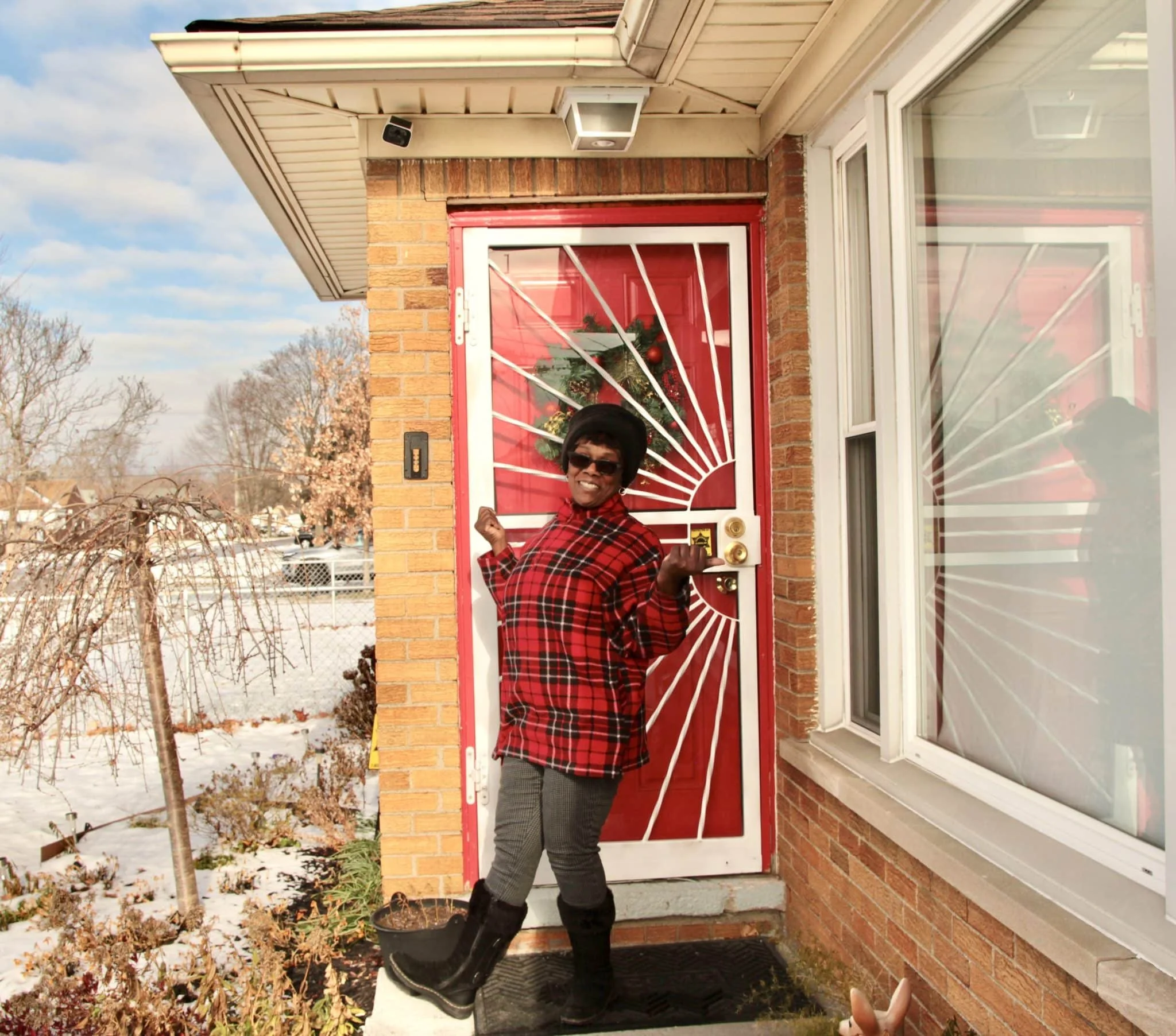
Pam Mason is joyous about being a homeowner in Regent Park. PHOTO: Jonah Clynes
Previously, Mason says she had terrible experiences renting from landlords who did not maintain their properties. She was drawn to the neighborhood by a referral from someone else who worked with LifeBUILDERS.
“I’m always referring other people to them,” Mason says. “They’re a great help to the community.”
Looking ahead – more housing plans for the neighborhood
While much progress has been made, Stricker says there is much more to be done. In the future, the nonprofit would like to continue its slow march of rehab projects into the southwest corner of Regent Park, where many blighted homes remain.
Long-term, they also have an eye on large-scale development projects for affordable housing, senior housing, and health and community resource clinics, Stricker says.
“We have a couple plots of land that, if the right partners come along and the timing is right, we can make it all work,” Stricker says. “We would love to provide even more of those resources to our community because we care about touching individual homes. At the same time, we want to stabilize the community in other ways.”
Creating stability for neighborhood families
For tenants who previously experienced unstable housing, a LifeBUILDERS house means stability, calm, and care, which radiates into every other aspect of their lives, Stricker says. This is especially pronounced in Detroit youth, who experience a disproportionately high rate of poverty and struggle at an early age.
“Especially looking at our young people and the instability that our kids have faced in housing, you see a huge impact once kids get to experience what it means to be a kid,” Stricker says.
And as blighted properties come back to life, so does the neighborhood.
While crime and safety continue to be issues in Detroit, Griffin says LifeBUILDERS has been a positive part of the neighborhood’s transformation. Getting homeowners into homes encourages residents to build and get connected to their community, he says.
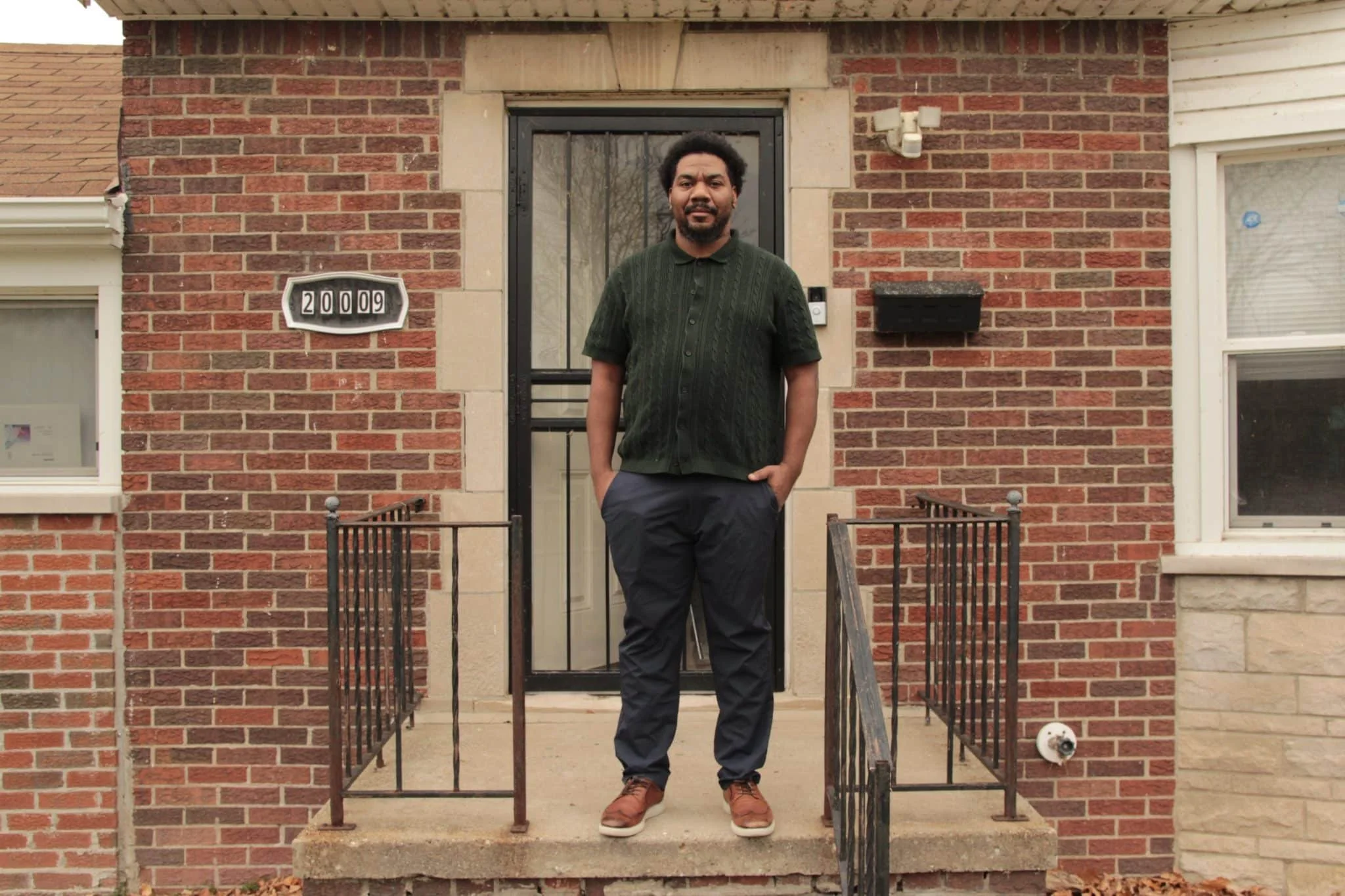
Jonathan Griffin once thought home ownership was out of reach for his family of five. PHOTO: Jonah Clynes
“It’s home,” Griffin says. “It’s all I know, and it’s what I want my kids to know. I believe better days are on the horizon for Detroit.”
Resilient Neighborhoods is a reporting and engagement series examining how Detroit residents and community development organizations work together to strengthen local neighborhoods. It’s made possible with funding from The Kresge Foundation.
Jonah Clynes, who snapped images for this story, is an artist and photographer residing in Regent Park.