
Authority Magazine Interview with Noah Stricker
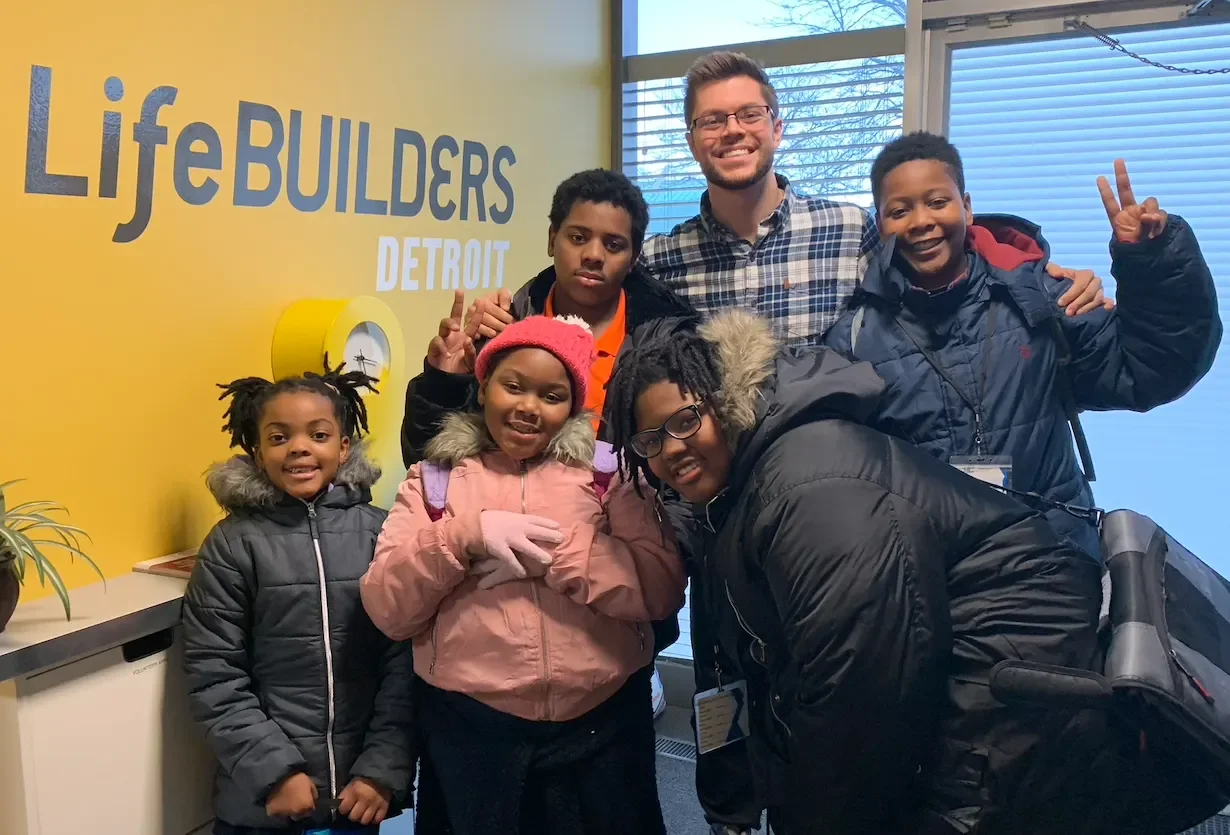
Social Impact Heroes Helping Our Planet: Why & How Noah Stricker of LifeBUILDERS Is Helping To Change Our World
The following interview was conducted by Authority Magazine Editorial Staff on Dec 4, 2025.
As a part of my series about “individuals and organizations making an important social impact”, I had the pleasure of interviewing Noah Stricker.
Noah Stricker serves as the Deputy Director of LifeBUILDERS Detroit, leading with a people first, service driven approach shaped by more than six years of experience in Christian nonprofit ministry and a transformative journey of faith. He is equipped with a Bachelor of Arts in Missional Leadership from the Moody Bible Institute and is currently pursuing a Master of Arts in Ministry Studies from Moody Theological Seminary, bringing both theological depth and practical leadership to his work in youth development and community engagement. Known for empathetic communication and genuine relational investment, Noah helps guide programs that have impacted thousands of lives and strengthened Detroit’s Regent Park neighborhood for more than two decades.
“Thank you so much for joining us in this interview series! Can you tell us a story about what brought you to this specific career path?”
Well, the short story is, I believe that I have been called to do this work. When I was in college, I was extremely self-centered and prideful. It was only through a series of difficult events that I was struck with the thought, There’s got to be more for me than this. From there, by beginning to live out my faith, I felt called to serve in whatever ways I could to help others — and that is what I feel called to today.
“Can you share the most interesting story that happened to you since you began leading your company or organization?”
Well, doing Christian community development work in Detroit leaves us with no shortage of stories. But one in particular that stands out happened not so long ago when we had some new young men visit our after-school program. These young men hadn’t been involved in LifeBUILDERS in the past, but they were invited and showed up. And while they were here, they thought they could get away with taking a couple of things that belonged to the ministry. While they were participating in the program, we noticed they’d been trying to steal some of our things. When we confronted them about it, they were surprisingly straightforward and honest. So, we actually let them stay and continued to pour into them. By the end of that same night, during discussions with their leaders, these young men were talking about stealing and said, “We want to stop stealing, but we don’t know how.”
Even in that first evening, we saw a change of heart. We’ve since been able to pour into these young men to the point where now they see that there is a different option for them to take with the trajectory of their lives. That recent story warms my heart. It speaks to the state of the community we’re working in, but it’s also why we’re here — to love on those who have been immersed in things that we believe aren’t the best option for their lives. So, yeah, that’s the story that stands out.
“It has been said that our mistakes can be our greatest teachers. Can you share a story about the funniest mistake you made when you were first starting? Can you tell us what lesson you learned from that?”
One day when I was first starting at LifeBUILDERS, I went to make coffee for our team. I turned on the system, scooped the coffee, positioned the pot, and started brewing it. What I didn’t do was put the coffee filter in! Not realizing my mistake, I served the coffee as if nothing was wrong. Well, my mistake quickly was realized by our Executive Director, who turned it into a funny teaching moment.
This little mistake embarrassed me greatly at the time, but the takeaway I have from that is not to be afraid of making mistakes and learning from them. So often fear of doing the wrong thing can paralyze leaders, and while we want to be discerning and wise, remember that mistakes are powerful opportunities to learn. When the right leader is willing to coach you through a mistake, you can come out much more well-rounded on the other side, and I hope to both have those types of leaders in my life as well as be that type of leader for others.
“Can you describe how you or your organization is making a significant social impact?”
LifeBUILDERS has been working in our community for over 20 years now. During that time, we’ve seen the trajectory of our neighborhood shift drastically. We’ve impacted nearly 150 properties, provided opportunities for nearly 40 people to become homeowners here, and touched thousands of lives through our programs. We’ve invested millions of dollars into the city of Detroit, but it’s the stories behind the numbers that demonstrate our greatest impact. Whether it’s a young girl opening up to us through tears about the bullying she’s experiencing, or a senior citizen finding a place to build community with other seniors, we care for each person we interact with because we believe they are made in God’s image and have value.
“Can you tell us a story about a particular individual who was impacted or helped by your cause?”
There are so many stories I could share here, but one in particular that stands out. We recently conducted a Dale Carnegie Leadership program for about 20 of our young people. On the night of the graduation from the program, many of our students had family members come out to support them. However, some of students didn’t have any family in attendance. As our leaders rallied around one of these young men with no family present, they let him know that he is a part of the LifeBUILDERS family. As that happened, a bunch of other young men who had participated in the program stood up and came to that young man and put their arms around him. There were many tears as a beautiful moment of love, support, and encouragement took place so naturally that evening.
“Are there three things the community/society/politicians can do to help you address the root of the problem you are trying to solve?”
The issues our community faces are widespread and complex, there are ways our community, society, and politicians can make an impact. First, our community is continuing to improve greatly, but one thing that can help address the root of the issues is if our neighbors continue to be more and more open about the issues they face and what they hope to see in order to improve it. Community feedback is an important part of how we operate as a ministry, and the more community members sharing openly about what their hopes and dreams are, the more informed our efforts can be!
As for society, I believe a sober recognition of the inequality in our community is essential to inspire people to move to help create opportunities. Society as a whole can work to provide more initiatives and opportunities for our community, addressing the root of inequality face on.
Lastly, politicians can spearhead much of this by working to address chronic issues in our community by providing increased funding. There is so much work to be done to support our local schools, public servants, public spaces, and more, but in order to do that there needs to be the funding to carry it out.
“How do you define “Leadership”? Can you explain what you mean or give an example?”
I believe leadership ultimately is service. Serving those who are following you means making decisions for the good of all involved. It is caring for people beyond what they can do for you, and instead in light of who they truly are. Sometimes that means making hard or unpopular decisions in the best interest of the larger group. When that happens, the people affected should still be able to recognize the level of care behind a leader’s choices.
For example, if an organization — especially a nonprofit — doesn’t meet its income goals, the ministry may have to make hard decisions regarding raises, benefits, or staffing opportunities. It’s not out of a lack of care that a leader makes those decisions; it’s out of a desire to serve the organization well. Sometimes that means cutting things that may be unpopular.
So, the gist of it is that caring for people and remembering who they are should guide you in making sure you’re serving them well as a leader.
“What are your “5 things I wish someone told me when I first started” and why. Please share a story or example for each.”
1. Walk in confidence, humbly.
So often confidence and humility seem to be viewed as opposites, and sometimes I’ve fallen into that trap. Walking in confidence is not a prideful endeavor, but rather an act of faith in the One who is holding all things together.
2. Have fun with it.
Taking ourselves too seriously is a common trait among leaders. I think living in joy is contagious, and leaders who do so inspire those around them.
3. Pursue vision passionately.
Some people may naturally receive tons of vision about where to take their organizations next and how to do that. However, I think it’s more common for leaders to wrestle with what the vision of their organization looks like. Vision is something that must be pursued fervently and only then can it inspire those you are leading.
4. Don’t lose sight of the big picture.
In nonprofit work, there’s always a bigger mission and purpose behind what is being done. However mundane a task may be, don’t lose sight of the meaning behind why you’re doing it, because its impact can go beyond your wildest imagination.
5. Get to the root.
When leading people, don’t be afraid to have very authentic, raw conversations about how things are going and where people are at. The ability to connect with team members on a deep level is not easy, but doing so brings about an entirely new level of trust and collaboration.
“Can you please give us your favorite “Life Lesson Quote”? Can you share how that was relevant to you in your life?”
I think the guiding principle in my life for the past seven years has been this: My life is not my own. In order to have an impact, I believe I need to lay down my selfish ambition and die to myself so I can serve and look to the needs and interests of others.
This has largely shaped why I do what I do and how I live — both in my ministry and outside of it. And it’s something I still wrestle with day by day, as I’ve found I can naturally tend toward selfish ambition. But I’m on a journey of trying to lay that down to serve those who have needs around me.
“Is there a person in the world, or in the US with whom you would like to have a private breakfast or lunch with, and why? He or she might just see this, especially if we tag them.”
I love learning from people who have gone ahead of me. Pastor and author Francis Chan has significantly impacted my perspective on life through his teaching and writing. I’d love to sit down with him and pick his brain on ministry, leadership, service, transition, and — most of all — his walk with God.
“You are a person of enormous influence. If you could inspire a movement that would bring the most amount of good to the most amount of people, what would that be? You never know what your idea can trigger.”
Jesus said it best in the book of Matthew: “Love the Lord your God with all your heart and with all your soul and with all your mind. This is the first and greatest commandment. And the second is like it: Love your neighbor as yourself.” No movement could be greater or more impactful than people living with a renewed love for God and loving each other as themselves. This is why we do what we do here at LifeBUILDERS, and I’d love for more people to be inspired by that same motivation.
“How can our readers further follow your work online?”
Please visit the LifeBUILDERS website — https://www.lifebuildersdetroit.com/. Otherwise, you can find LifeBUILDERS on Instagram and Facebook.